
informational 5 min read
Louvre Egyptian Collection: Seated Scribe and Great Sphinx
Updated October 28, 2026
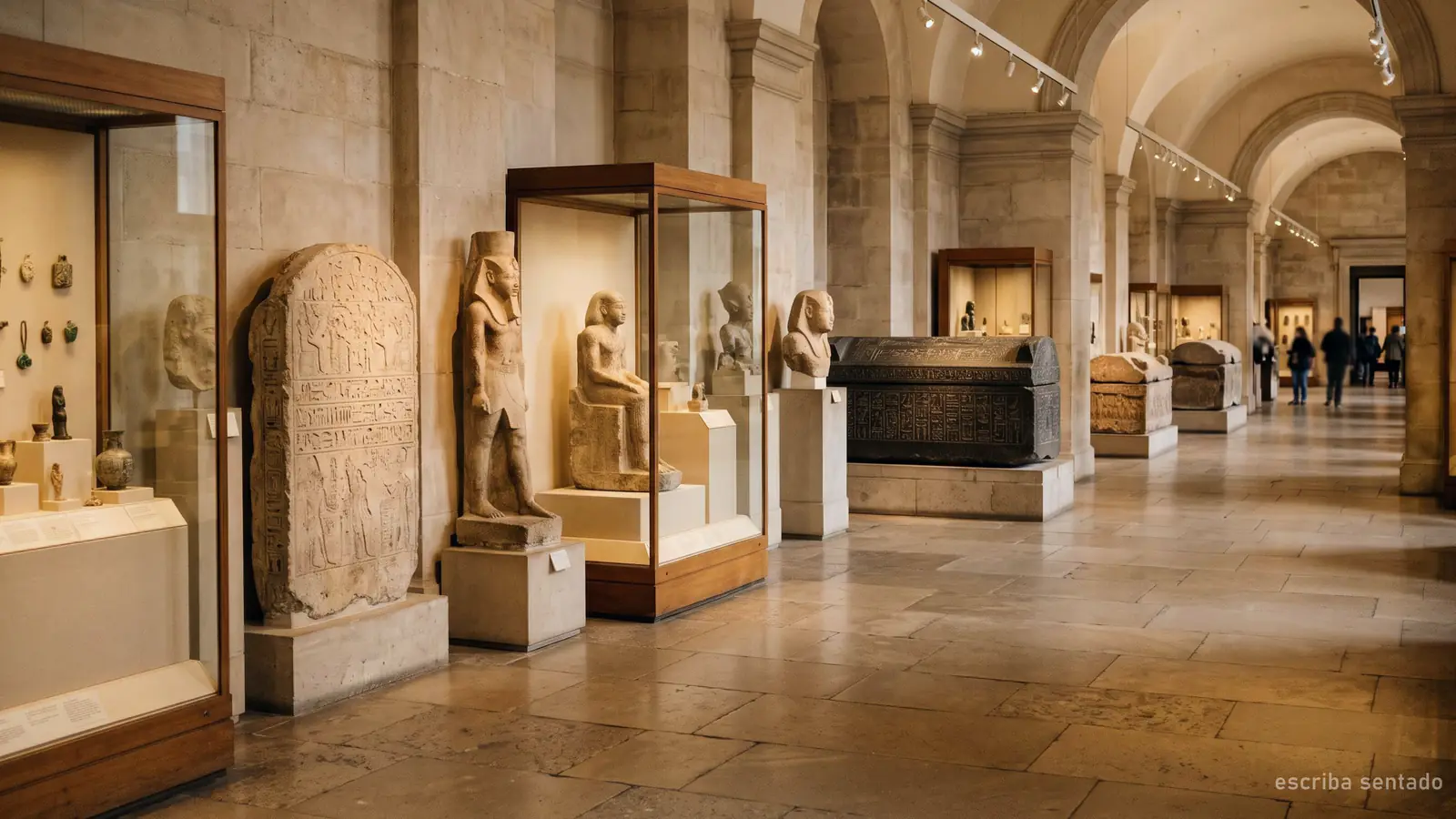
In the Louvre Egyptian collection, the two things to see above all are the Seated Scribe, a painted limestone statue more than 4,500 years old with inlaid rock-crystal eyes, and the Great Sphinx of Tanis, a lion with a king’s head carved in granite that guards the entrance to the Egyptian rooms. Both are in the Sully wing, in a department that, according to the museum, holds more than 6,000 works spanning almost 5,000 years of Egyptian history.
What Egyptian art is in the Louvre?
There is a complete tour of Egyptian civilization, spread over two floors of the Sully wing (levels 0 and 1) plus the crypt on level -1. The museum arranges it in two ways:
- A thematic route: the Nile and its annual flood, monumental architecture, hieroglyphs, daily life (trades, furniture, jewelry, clothing) and, after that, religion and funerary rites.
- A chronological route: from the Predynastic period to the Ptolemaic era, room by room.
The department has a history of its own. The Louvre’s first Egyptian museum opened in 1827 with four rooms, and it was created and run by Jean-François Champollion, the man who had deciphered hieroglyphs in 1822. The collection later grew through the excavation shares agreed with the Egyptian government.
What is the Seated Scribe?
It is a statue of a scribe sitting cross-legged, from the Old Kingdom. Although in French it is called Le scribe accroupi (“the crouching scribe”), the museum itself points out that he is not crouching but sitting. According to the museum, he probably represents a high official. These are its details from the Louvre’s record:
| Detail | Value |
|---|---|
| Date | 4th Dynasty, around 2675–2545 BC (by style) |
| Material | painted limestone |
| Eyes | rock crystal (iris), Egyptian alabaster (white of the eye) and copper (outline) |
| Size | 53.7 cm high, 44 cm wide, 35 cm deep |
| Found | North Saqqara, November 19, 1850, by Auguste Mariette |
| Entered the Louvre | December 1854 |
| Inventory number | E 3023 |
| Location | Sully wing, level 1, room 635 (Old Kingdom), display case 10 |
What strikes people most are the eyes. The museum explains that, thanks to the rock crystal, the gaze seems to follow you as you walk around the case. Much of the original paint survives. Spanish Wikipedia proposes a different date (2480–2350 BC); here we give the museum’s.
What is the Great Sphinx of Tanis?
It is a granite sphinx, with a lion’s body and a king’s face, 1.83 m high and 4.80 m long. Spanish Wikipedia dates it to around 2600 BC, in the Old Kingdom, although several later pharaohs usurped it: the original inscriptions were erased and the ones you can read today name Amenemhat II (12th Dynasty), Merneptah (19th Dynasty) and Shoshenq I (22nd Dynasty). It was found in 1825 among the ruins of the Temple of Amun at Tanis (Sharqia Governorate, Egypt), and entered the Louvre in 1826.
It stands in room 338, in the crypt of the Sully wing (level -1), and it is the first piece you see when you enter the Egyptian collections from that side.
Which other Egyptian pieces should you not miss?
Besides the Scribe and the Sphinx, the museum highlights these rooms and works:
- The crypt of Osiris (room 323, level -1).
- The statues of the goddess Sekhmet in the temple room (room 324, level 0).
- The chapel of the mastaba of Akhethetep (room 333, level 0), bought from the Egyptian government in 1903 and rebuilt stone by stone in the museum, with painted reliefs of daily life, farming, animals and plants.
- The Book of the Dead gallery, the Magic room and the animals gallery (rooms 317, 318 and 319), reopened in early 2026.
- Individual pieces the museum lists among its major works: the Dendera zodiac ceiling, the statue of Amun protecting Tutankhamun, statues of Senusret III, Akhenaten, Nefertiti and Ramesses II, the Gebel el-Arak knife and the Stele of the Serpent King.
Where is the Louvre’s Egyptian department?
It is in the Sully wing, the one around the Cour Carrée (Square Courtyard), spread across level -1 (the Sphinx crypt), level 0 and level 1. If you enter through the pyramid, follow the signs to Sully; the Sphinx is waiting for you in the crypt. The museum warns that room numbers can change, so check the location on the Louvre map on the day of your visit.
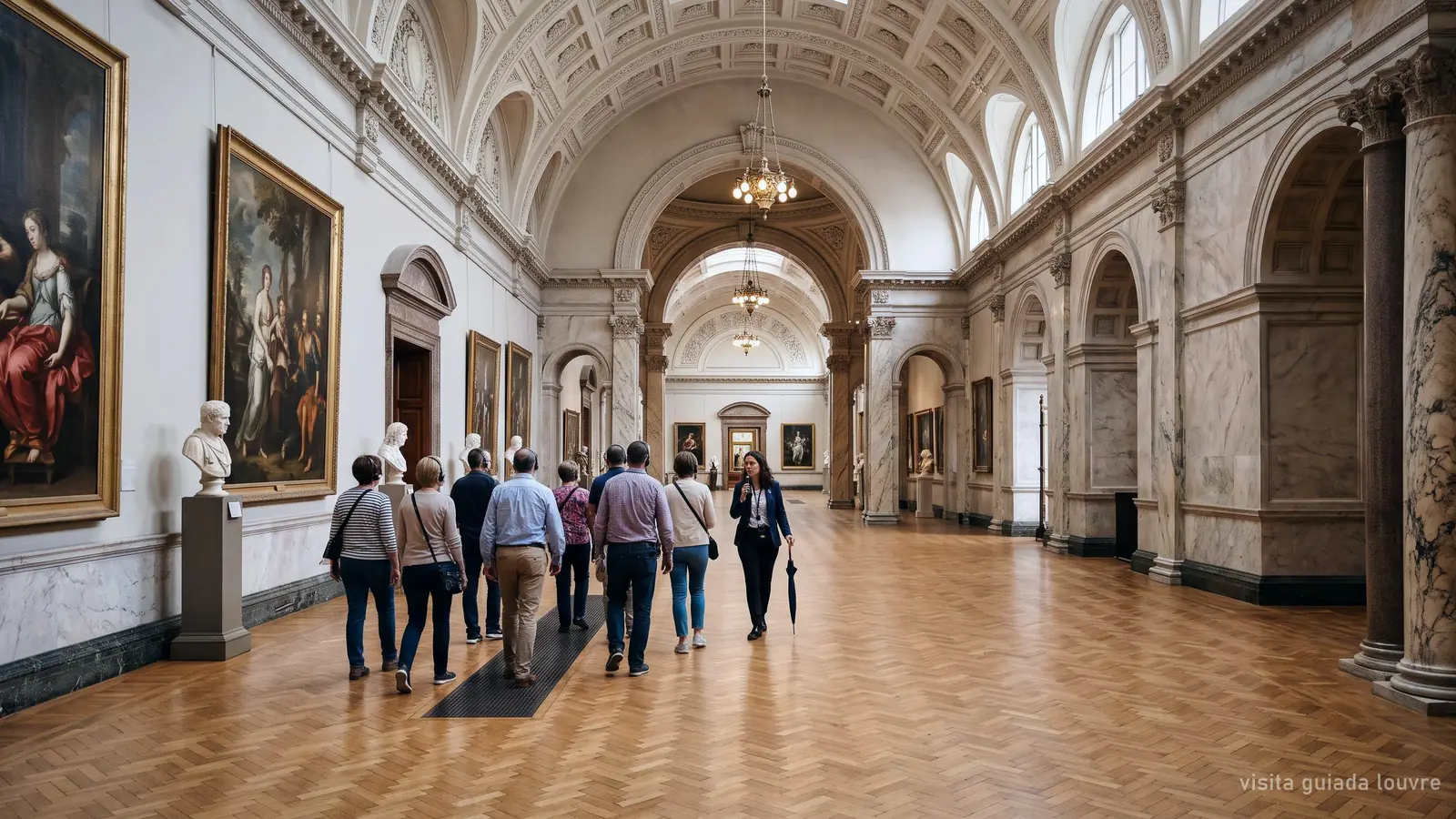
From here, the stele of the Code of Hammurabi is in the Richelieu wing, level 0, if you want to carry on with antiquity. Among the works the museum highlights there is also a mummy in its cartonnage and several sarcophagi; if you are going as a family, look at the Louvre tour for kids, private and 2 hours long, from $110. General admission costs €22 for European Economic Area residents and €32 for everyone else.
Check prices & dates
Book your tickets in advance: popular time slots sell out.
Book tickets
From$66per person
Check availability- Free cancellation up to 24 h before on 9 of 10 options
- Louvre entry included in all of them
- Prices in US dollars
Price checked Oct 27, 2026
Sources